
Signs you need new windows can include deteriorated frames, repeated water entry and operation that can no longer be repaired reliably. Other symptoms, such as a failed handle or fogged glass unit, may need a smaller repair. The important question is which part has failed and whether the sound parts can stay.
These seven signs help you describe the problem and decide how promptly to act. They are inspection clues, not seven automatic reasons to replace every window in the house.
1. The window will not open, close or stay safely in position
A sash that drops unexpectedly, a crank that slips or a window that cannot be secured needs prompt attention. Stop using an unstable sash and keep people clear rather than propping it open with an improvised object.
The cause may be a worn balance, hinge, lock or operating mechanism. If the sash and frame are sound and compatible parts are available, a component repair may restore normal use. A badly distorted frame or widespread deterioration can make a larger replacement more appropriate.
Describe exactly what happens: does it stick only in one position, refuse to latch or move unevenly? That information helps distinguish an operating fault from a problem with the whole opening. If the window serves an emergency-opening function, do not postpone addressing a fault that prevents its use.
2. There is fog between window panes
Moisture trapped inside an insulated glass unit often indicates window seal failure. It cannot be wiped away from the room or exterior surface because it is inside the sealed space.
When the surrounding sash and frame remain suitable, window glass replacement may address this problem without removing the whole window. Ask whether the existing glass has warranty coverage and whether that coverage includes installation labour.
Do not treat all condensation as the same symptom. Room-side moisture can form when humid indoor air meets cold glass. Exterior condensation can also occur under suitable weather conditions and does not, by itself, establish a failed unit. Natural Resources Canada’s condensation guide explains why the location matters.
One window, three moisture locations
Review indoor moisture and air movement.
Have the sealed glass unit assessed.
Exterior dew alone does not prove seal failure.
Conceptual cross-sections, not to scale. Identify the surface from safe, normal access; do not dismantle the unit.
3. Water is entering or the frame is deteriorating
Wet trim during rain, persistent staining and rotting window frames need investigation of the water path. The source may be the window, its perimeter detailing or nearby building materials. Replacing a pane alone will not fix water entering around the opening.
Document when the leak occurs, which side becomes wet first and whether wind direction matters. Photograph the affected area from a safe position and report active leakage promptly, especially in a condo where other parts of the building may be involved.
For a condo window in Richmond Hill, confirm who is responsible for the opening and whether the tint or coating must match the building before ordering. Our Richmond Hill glass-service guide explains the window details to discuss with property management.
Small, localised damage may be repairable once the source is corrected. Extensive decay, a distorted frame or deterioration in the surrounding opening can justify full-frame work. The quote should identify what will be exposed and how concealed damage will be handled.
4. You feel persistent drafts when the window is closed
Drafty windows may have worn weatherstripping, poor sash alignment or gaps around the installed frame. First check that the window is fully closed and latched, without forcing damaged hardware.
Note whether the moving air is at the sash edge, the trim or another nearby opening. Feeling cold beside glass is not always the same as an air leak; a cold surface can also affect comfort. The remedy depends on which condition is present.
A seal or perimeter repair can be useful where the assembly remains serviceable. If the frame cannot close squarely or repeated repairs do not address the documented fault, compare a larger replacement. Avoid blocking designed drainage openings in an attempt to stop a draft.
5. Glass is cracked, chipped or broken
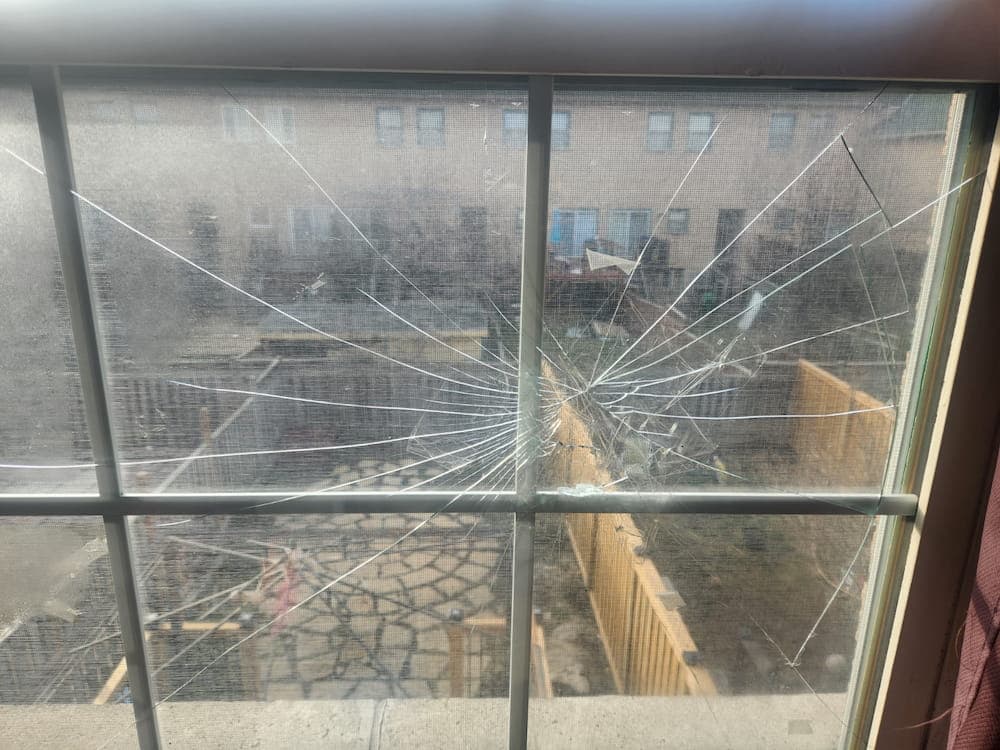
Damaged glass deserves prompt assessment, particularly where people can touch it or fragments could fall. Keep children and pets away and avoid operating the affected window. Do not test a crack by pressing on it.
The replacement scope depends on the glass construction and the surrounding window. A crack does not automatically require a new frame, but tape, resin or polishing does not restore a failed pane's original performance. The replacement needs the correct dimensions and specification for the location.
If an opening has suffered repeated breakage, have the installation and support conditions reviewed as well as the pane. Replacing the same glass repeatedly without investigating the cause may leave the problem unresolved.
6. Outside noise has become more noticeable
Traffic noise may enter through glazing, gaps, worn seals or other parts of the building. Note whether it changes when the window is correctly closed and locked, and whether the problem is new or simply more noticeable after a change outside.
An isolated seal problem may have a targeted repair. If quieter rooms are the goal of a replacement, request sound-performance information for the complete proposed window. Pane count or a generic acoustic-glass label does not predict the result in your room by itself.
The surrounding wall, vents and other openings can limit the improvement, so describe the actual noise rather than asking only for thicker glass.
7. Comfort remains poor and bills have changed
Higher energy bills alone do not prove that windows are responsible. Weather, energy rates, thermostat settings and household use can all change the total. Look for a documented window-related problem, such as persistent leakage, unsuitable glazing or a cold perimeter.
An inspection or broader home-energy assessment can help prioritise work. Replacing a failing assembly may improve comfort, but a fixed percentage saving or a promised resale return is not a reliable reason to replace otherwise serviceable windows.
If the goal is a new view, colour or operating style, treat that as a design choice. It can still be worthwhile, but compare its cost and disruption separately from repairs that are needed now.
Questions before you decide
Should 25-year-old windows automatically be replaced?
No. Age is a reason to inspect condition and parts availability, not an expiry date. Glass, frames, seals and hardware can age differently. A working older window and a badly deteriorated newer one should not receive the same recommendation simply because of their age.
You also do not need to assume that every opening must be done at once. Prioritise unsafe operation, damaged glass and active water entry, then compare repair or replacement for the remaining windows individually.
Why might condensation get worse after replacement?
A tighter window does not remove indoor moisture. Changes in ventilation, humidifier use and household activity can affect condensation even after an upgrade. Note when the water appears and which surface is wet, and review indoor moisture control rather than assuming the new glass has failed.
Does one fogged unit mean the whole window must go?
Not necessarily. When the surrounding sash and frame remain suitable, a measured replacement insulated glass unit may address the failed glass. The frame, operation and any water entry still need assessment.
Get a diagnosis that identifies the component
Ask the assessment to distinguish glass, hardware, sash, frame and surrounding installation. Our window repair versus replacement guide explains those scopes in more detail.
Glass Repair Canada provides residential window glass replacement in Toronto and the GTA. Send photos, the number of affected openings and a description of the symptoms. If the glass is the failed component, the team can discuss whether suitable existing frames can remain and what the replacement work includes.
Discuss window glass replacement