
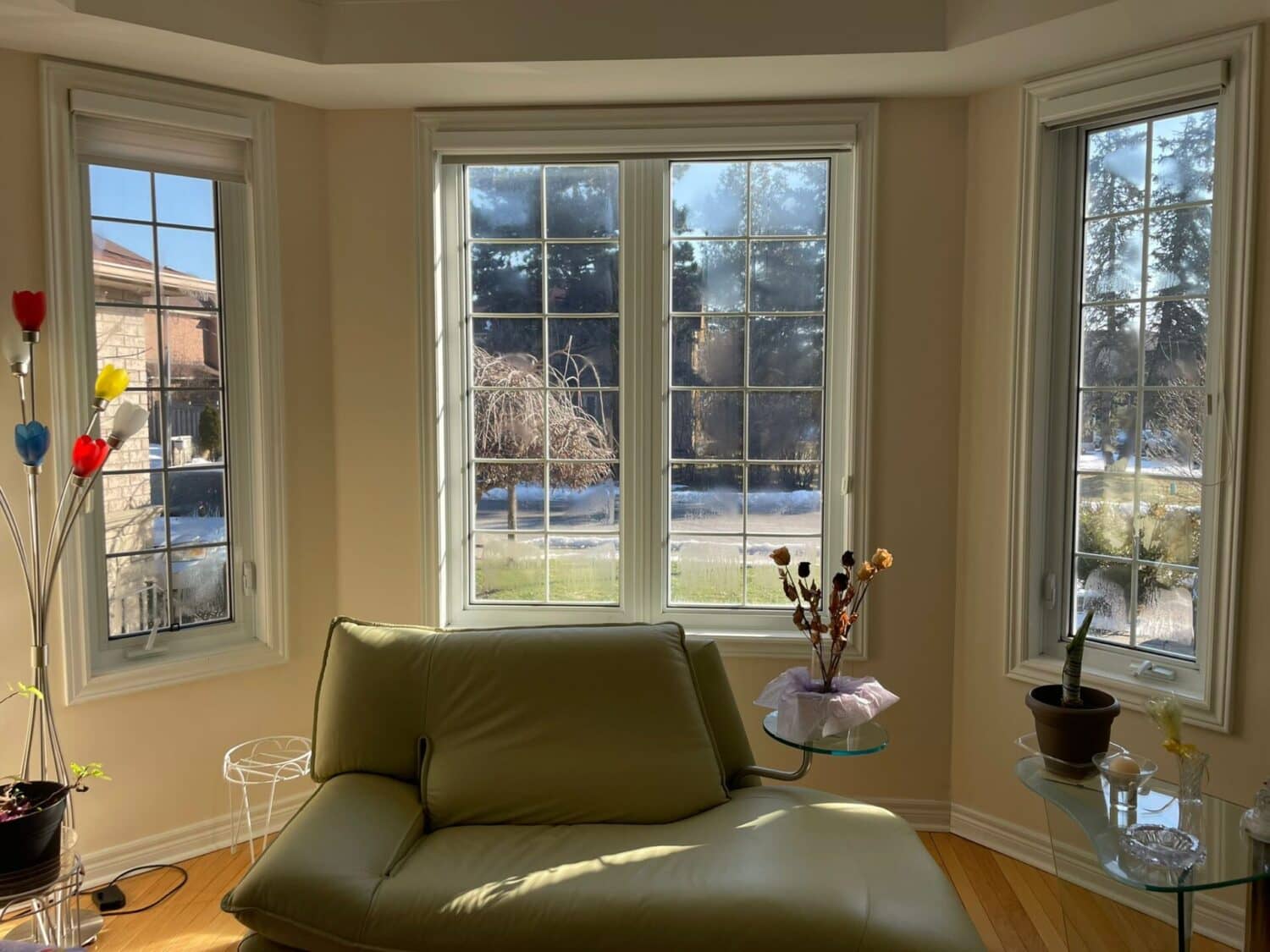
Window condition guide • Toronto & GTA
One fogged pane does not automatically mean every window needs replacing. Equally, new glass will not solve a rotten frame or water entering around the opening. The useful window repair vs replacement decision starts with what has failed and whether the surrounding parts are still worth keeping.
A targeted repair can restore operation, replace damaged glass or reduce a specific air leak. Wider replacement becomes more sensible when several parts are deteriorating, the opening needs repair or the existing design no longer meets the home’s needs. Age is context, not a diagnosis by itself.
Repair a defined defectEstablish which part has failed and whether the retained components remain suitable.
Replace for a defined reasonExplain which unresolved problems or design needs justify changing more of the window.
Start with the symptom, then find its source
Fog or moisture on the glass
Window condensation on the room-side surface may be related to indoor humidity, cold glass and limited air movement. It needs a different response from moisture trapped between the panes. Clean the accessible surfaces using the approved method and note where the moisture remains, without dismantling the unit.
A failed sealed unit can often be replaced while a sound sash and frame remain. If the glass is clear but rain appears around the trim or sill, investigate the water-entry path. New glass alone may leave that problem untouched. Our cloudy double-pane window guide explains these moisture distinctions.
Drafts near the opening
A draft can come from worn weatherstripping, poor sash fit, missing perimeter air sealing or a frame that no longer closes correctly. The location of the leak matters. A glass upgrade can reduce heat transfer but cannot close a gap around the sash.
Ask the assessor to identify the air path and show how the proposed repair addresses it. A cold surface or cool air moving near a window is not, by itself, proof that the glass is leaking air.
Difficult opening, closing or locking
A worn crank, hinge, balance or lock may be replaceable when the sash and frame remain serviceable. If the window is distorted or the hardware no longer has sound material to attach to, replacing the mechanism alone may not be enough.
Do not force a stuck or unstable sash. Stop using it if it could fall, detach or break, and arrange a repair assessment. Describe whether the problem developed gradually or followed damage or other work.
Cracked glass or damaged edges
Keep people away from the damage and arrange prompt glass assessment. Glass-only replacement may be appropriate if the surrounding assembly is sound, but the cause and support condition still need checking. A new pane should match the required safety construction, dimensions and glazing details.
When the existing frame is worth keeping
A retention assessment should cover more than appearance. The frame and sash need to remain stable and suitable for the proposed work. Operation, drainage, seals, fixing points and the condition of the glazing pocket all matter.
- 1. GlazingA new pane or sealed unit can address failed glass. It does not renew worn hardware or fix an unrelated leak.
- 2. Sash and hardwareFit, operation, weight capacity and sound fixing points affect whether retained parts are suitable.
- 3. Frame and openingWater entry, deterioration, drainage and surrounding materials may need wider investigation.
Ask whether deterioration is local and repairable or widespread. A small repairable defect does not necessarily justify a full replacement, while concealed water damage may require more investigation. Any proposed window frame repair should identify the damaged area, repair method and what will be checked afterward.
For glass-only work, the new unit must fit the existing sash. Thickness, weight, coating, tint and safety requirements should be established before fabrication. A different glass package is not automatically compatible just because its visible width and height match.
Older wood windows deserve a specific comparison
An older wood window may have architectural details and proportions worth preserving. Restoration can include repairing soundly repairable timber, restoring operation, renewing weatherstripping and considering suitable secondary or storm glazing. Those are distinct scopes, so ask what is actually included.
Compare that proposal with replacement on comfort, maintenance, operation, appearance and expected serviceability. A superficial patch and a comprehensive restoration are not equivalent bids. Repeated repair effort also matters if the same deteriorating parts keep failing.
For a designated property or one with heritage constraints, confirm the applicable approval process before altering windows. Even without formal restrictions, check how a proposed replacement changes frame proportions and visible glass area.
Three situations that lead to different answers
Illustrative situations, not diagnoses or documented company projects.
Two fogged units
A Toronto homeowner has two fogged units, but both windows open and lock properly and the frames are sound.
Include replacement sealed units, with matching appearance and glass specification, before automatically replacing every component.
A sticking wood sash
A century-home owner has a sticking wood sash and worn hardware.
A scoped restoration assessment can establish serviceability and the weather-sealing work included. Replacement is an option to compare, not a foregone conclusion.
Water entry, rot and distortion
A window has recurring water entry, substantial rot and a distorted frame.
Replacing the pane would not address the wider failure. Investigating the opening and water-management details may lead to full-frame replacement and surrounding repairs.
These examples illustrate how the condition of the opening changes the scope. Your assessment should identify which parts remain serviceable before work is priced.
Prepare better questions before collecting prices
Select a symptom to see which questions to bring to the assessment. If several problems overlap, review each one. This helper does not diagnose the window or recommend a product.
Make the quotes comparable
Ask for written repair and replacement scopes tied to the observed problem. A glass-only quote, an insert window and a full-frame replacement include different amounts of removal and finishing. The replacement-scope guide explains those installation differences. When a new window is the right scope, our guide to choosing windows covers room use, ratings and a written schedule. Our signs you may need new windows help record the symptom first.
Glass and retained parts
Compare the glass specification, frame or sash work, hardware and air sealing.
Removal and finishing
Include removal, disposal, trim and cleanup. For wider replacement, identify flashing and surrounding repairs where needed.
Concealed damage
Agree how additional damage will be documented and how extra charges require approval.
Cost and warranty
Request CAD totals with tax and exclusions stated. Keep responsibility clear for glass, hardware and installation.
If several windows are affected, ask whether the work can be phased and whether mobilisation or access costs change when units are grouped.
Will defogging or better glass fix everything?
Clearing moisture from a failed unit is different from restoring its original factory seal and thermal performance.
Better insulated glazing can improve comfort and reduce heat transfer, but its effect on household bills depends on the rest of the home and the installation. Do not treat a salesperson’s fixed payback period as a result for your house. If incentives affect the budget, check the current provider’s eligibility and application sequence before ordering.
Questions about window repair and replacement
Does one fogged pane mean all my windows need replacing?
No. If the sealed unit has failed and the sash and frame remain suitable, replacement of that glass unit may be possible. First distinguish between surface moisture, between-pane fog and water entering around the opening.
Can new glass fix a draft?
A glass upgrade can reduce heat transfer, but it cannot close a gap around the sash or opening. The air path should be identified so the work addresses weatherstripping, fit or perimeter sealing where needed.
When is full-frame replacement worth comparing?
It becomes more relevant when deterioration, distortion or problems around the opening cannot be adequately resolved by a suitable targeted repair. The quote should identify the observed reason for the wider scope.
Should an older wood window automatically be replaced?
No. Compare a defined restoration scope with replacement on operation, comfort, appearance, maintenance and serviceability. Confirm heritage requirements where they apply before altering the window.
Get a recommendation for the failed component
Glass Repair Canada provides residential window glass repair and replacement in Toronto and the GTA. Send photos, a description of the symptom and any window labels, and ask whether the glass can be replaced while the surrounding assembly remains.
The right scope should explain what is being retained, what is being changed and why the work will address the problem. That is a firmer basis for a decision than replacing solely because of age or repairing solely because the first quote is lower.
Discuss residential window glass