
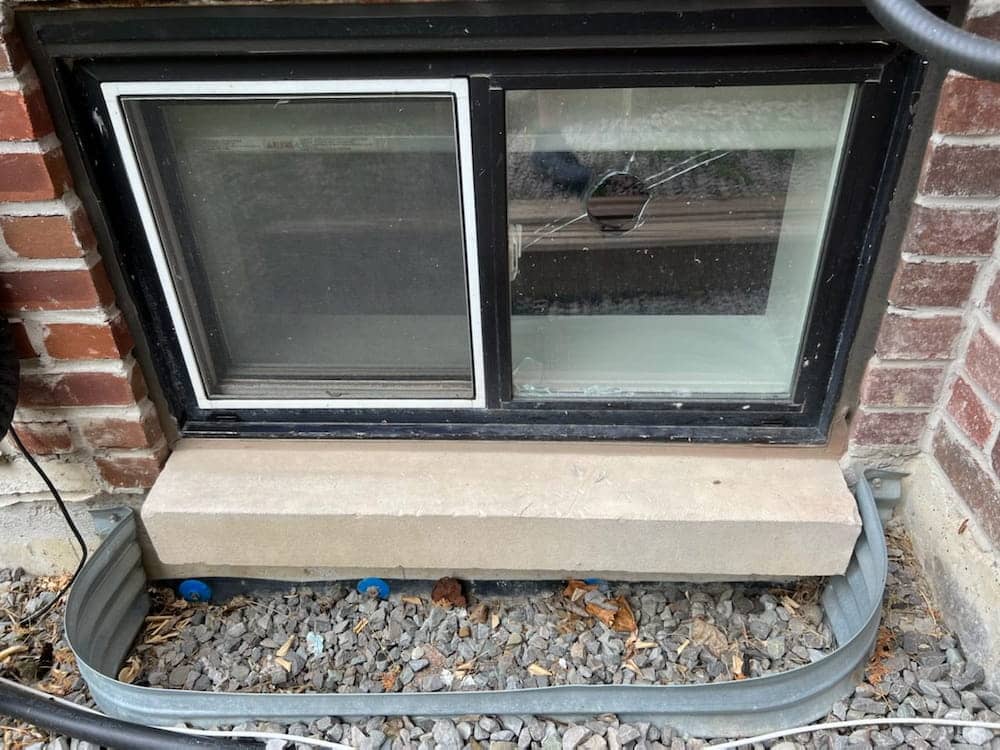
Glass repair decisions • Toronto & GTA
A crack in a house window, shower door or cabinet does not have the same repair options as a chip in a vehicle windshield. If you are deciding how to repair cracked glass, first identify where the glass is used and keep the damaged area out of use. Adhesive can change the appearance of some decorative objects; it does not establish that building glass has regained its original strength or safety performance.
For a window with a sound frame, the practical repair may be glass pane replacement rather than replacing the whole window. For a sentimental object, conservation for display may preserve its value without returning it to drinking, heat or load-bearing use.
First make space around the damage
If broken glass leaves an exposed opening, contact an emergency glass service about safe temporary protection. Ask what the site needs while replacement is arranged. Do not assume tape, glue or a film makes a cracked pane safe to operate, and do not remove fragments that remain attached to the frame.
Photographs taken from a safe position can help explain the problem. Capture the overall opening, the crack and the surrounding frame or fittings without touching the glass. Note when it appeared and whether anything struck the pane.
Start with the use, not the length of the crack
Choose the location using what you already know. This helper points to the appropriate assessment route; it does not diagnose the cause, approve a repair or establish that glass is safe.
What the crack can tell you, and what it cannot
Impact, uneven temperature, pressure from supports and movement in the surrounding assembly can all be relevant to glass damage. A visible pattern may offer clues, but it does not prove the cause. A line that starts at an edge is not automatically a particular type of failure, and a short crack is not automatically repairable.
The assessment should consider the glass construction, location, support, edge condition and any recent work. For example, replacing a pane without investigating a frame that is pressing on it may leave the underlying problem unresolved.
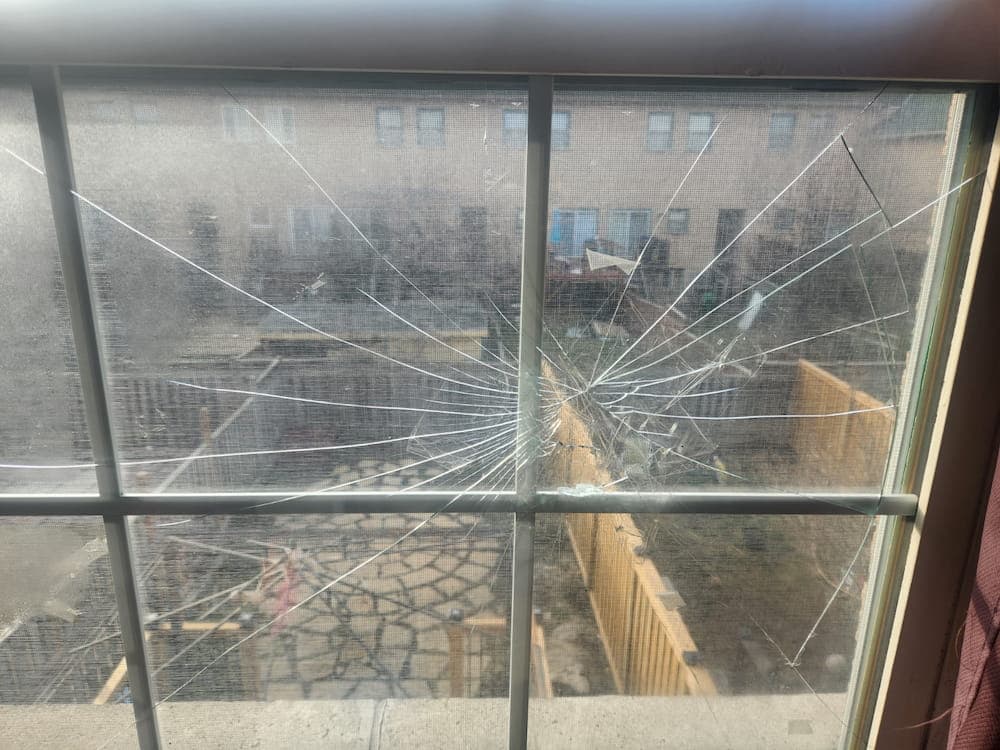
There is no universal one-inch rule that makes a household crack suitable for DIY resin. Location and use matter: a small defect in a guard or moving shower door carries different consequences from a cosmetic fault in a display object.
A cracked house window: keep the frame if it is sound
Cracked window repair often means replacing the damaged glass while retaining a suitable sash and frame. The glazier checks the opening, measures the required dimensions and identifies the thickness, coating, pattern and safety construction needed to match the application.
With a double-pane window, the replacement is commonly a complete factory-made insulated glass unit rather than a bead of sealant over the visible crack. That unit includes the panes, spacer and edge-seal construction. Surface glue does not recreate that assembly or its original thermal performance.
What may remain
What may be replaced
Conceptual component drawings, not to scale. These are not removal or installation instructions. The actual window system determines the scope.
If the frame is rotted, warped, leaking or unable to support the new glass correctly, wider repairs or replacement may be needed. Our window repair versus replacement guide discusses the wider decision. Ask which observed defect justifies the proposed scope; a draft or a crack alone does not establish that the whole window needs replacing.
A cracked shower door or glass railing
These are safety-critical applications. Keep them out of use and arrange assessment even if the panel remains standing. Tempered glass can release into fragments when it fails; a laminated panel may retain fragments but still be damaged and unsuitable for continued use.
The replacement needs to suit the existing system, including supports, thickness, holes, notches and clearances. Tempered glass cannot be cut or drilled after it has been made to accommodate a different hinge or bracket. This is one reason final measurements and hardware details matter before ordering.
If the surrounding fittings are loose, worn or damaged, include that issue in the assessment. Replacing the glass alone does not correct every support or movement problem.
A cabinet, picture frame or unusual curved pane
Glass pane replacement may preserve the cabinet, frame or furniture around the damage. A matching replacement should account for thickness, edge treatment, tint, texture and any curve or unusual shape. A standard flat pane and a curved display panel are not the same fabrication job.
Where a rare decorative pane is difficult to reproduce, a conservator may consider a repair intended to improve appearance. Ask how visible the repair will remain, how the piece can be handled afterward and what uses must be avoided. An improved-looking joint does not establish original strength.
Replacement pane
Match the glass specification while preserving suitable surrounding furniture or framing.
Decorative conservation
Agree on appearance, handling and display restrictions. Do not assume the repaired object can return to drinking, heat or load-bearing use.
Do not hide a repaired crack when selling or giving away the item. The next owner needs to know about the repair and any restrictions on use.
Why windshield repair kits are a different category
Automotive chip repair uses application-specific materials and procedures on suitable vehicle glazing. A demonstration showing resin improving a windshield chip does not establish that it can restore a house window, shower panel or load-bearing glass object.
For vehicle glass, use an automotive-glass specialist. For an oven, microwave or fireplace pane, follow the appliance manufacturer’s service route and stop using the affected appliance until it is assessed. Ordinary architectural glass should not be substituted for a specified heat-resistant assembly.
What to ask before approving the work
Request a scope that identifies the affected glass and the proposed replacement or conservation method. Keep the following details together before approving the work:
- The glass and methodLocation, construction, dimensions, finishes and any required fabrication.
- The complete workRemoval, disposal, access and any repairs to supports or surrounding finishes.
- The underlying problemWhat will be checked to reduce the chance of the same problem recurring.
- The schedule and temporary protectionCustom fabrication lead time and what the site needs while replacement is arranged.
A scratch needs a different decision from a crack. The glass scratch-removal guide explains why cosmetic polishing cannot be used to restore a fractured pane.
Questions about cracked glass
Can glue make a cracked window safe again?
Adhesive can change the appearance of some decorative objects, but it does not establish that building glass has regained its original strength or safety performance. Ask for assessment and the appropriate replacement scope.
Does a crack shorter than one inch qualify for DIY repair?
No universal one-inch rule makes a household crack suitable for DIY resin. The glass construction, location, supports and use matter more than a simple length threshold.
Does a cracked double-pane window need a whole new frame?
Not necessarily. A suitable sash and sound frame may remain while the complete insulated glass unit is replaced. A damaged or unsuitable frame can require wider work.
Can ordinary tempered glass replace an appliance pane?
Do not substitute ordinary architectural glass for a specified heat-resistant appliance assembly. Stop using the affected appliance and follow the manufacturer’s service route.
Arrange the right assessment for the opening
For cracked residential or commercial glass in Toronto and the GTA, contact Glass Repair Canada or call 416-736-1899. Describe the location and whether the opening is exposed or the affected door is still in service. Ask about current availability and the appropriate make-safe and replacement steps for that particular assembly.