
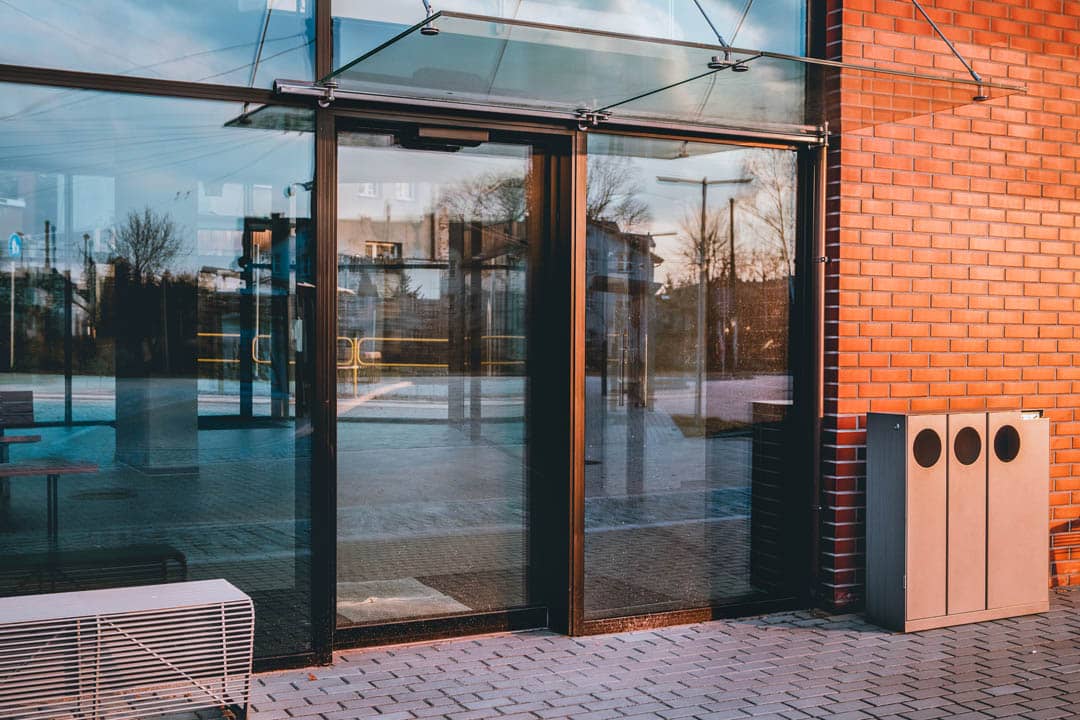
Home entrance choices • Toronto & GTA
Glass front doors for homes can brighten a dark entrance and make it easier to see who is outside. They work best when the amount of glass suits the foyer, the view from the street and the household’s privacy needs. Start with those three things before choosing a decorative pattern.
A full-glass front door is a different proposition on a secluded porch than beside a busy Toronto sidewalk. The important choice is how the complete entrance will work, including the door, sidelights, frame, locks and weather seals.
How much glass makes sense at your entrance?
Full-height glazing shares the most open view, but it may also expose a hallway, stairs or living room to visitors. Stand at the property line, the walkway and the doorstep to see what is visible. Include the angle from neighbouring windows, rather than checking only straight through the door.
Full-height glass
An open view over most of the door height. Check the whole hallway sightline.
Half-glass insert
Light at the upper part of the door, with more screening below.
Upper insert
A smaller glazed area to compare with the foyer’s daylight needs.
Clear sidelights
A solid door can still leave views through the glass beside it.
Illustrative configurations, not product specifications. Blue identifies glazing; it does not represent a measured tint, privacy level or energy rating.
Half-glass and smaller upper inserts can bring light into the foyer while hiding some lower-level activity. Sidelights are another option, although a narrow clear sidelight can still provide a direct view into the home. A solid door with clear sidelights does not automatically solve front door privacy.
Think about everyday habits too. A dog that watches every passerby, coats hanging opposite the entrance or a direct view toward a bedroom can change how comfortable a clear door feels. An offset foyer may make the same design much easier to live with.
Compare the entrance as a group: the door glazing, the panels beside it and any glass above. The amount of glass in the door leaf is only part of the view into the foyer.
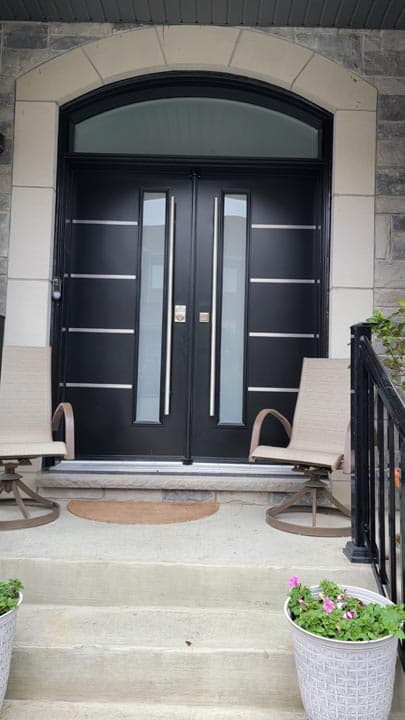
Check privacy after dark, not just in a showroom
Frosted, patterned and textured glass scatter or distort the view. They differ in how much detail remains visible, especially when a person stands close to the pane. Decorative clear borders can undo the privacy provided by the centre panel.
Take a sample into the actual entrance if possible. With indoor lights on, have someone view it from the approach while another person stands at normal distances inside. Look for silhouettes, clear strips and visibility through adjacent glass. A sample held against a bright showroom wall cannot reproduce every condition at your home.
Tint changes colour and light transmission, but it is not a dependable substitute for an obscuring finish or a planned privacy covering. If you choose a blind, confirm that its mounting and operation suit the door without interfering with hardware or damaging the glazing system.
Safety glass and security answer different questions
Safety-glass construction
Tempered glass is designed to break into smaller fragments than ordinary annealed glass. Laminated door glass incorporates an interlayer that can hold fragments together.
Entrance security
Neither description alone establishes how the complete entrance resists forced entry. Glass retention, the frame, anchoring, locks and hinges all need consideration.
For security, request information for the actual door assembly. Ask how the glass is retained, how the frame is anchored, and which locks and hinges are supplied. If a supplier describes a product as security-rated, ask for the test or classification and the exact configuration it covers. Decorative frosting does not strengthen the door.
A glazed half-door and a full-glass design may use different construction, even from the same range. Compare their documented specifications rather than assuming that less glass always means a tested security improvement. Our laminated and tempered glass guide explains the material differences in more detail.
What matters during a Toronto winter?
For energy-efficient exterior doors, look at the whole-door rating, not a claim about one pane. The insulated glazing, frame, weatherstripping, threshold and installation all contribute to comfort. Two doors with a similar appearance may have different glass packages and air-leakage performance.
Describe the entrance’s exposure when requesting advice. A sheltered porch, a sunny south-facing door and a wind-exposed entry present different concerns. Ask how the specified door handles those conditions and how the installer will seal and finish the opening.
Natural Resources Canada’s window and door guide explains why door condition, weather seals and installation need to be considered together.
Plan cleaning, operation and future repairs
Cleaning
A large clear pane makes fingerprints and dog-nose marks noticeable. Check which surface carries any texture or coating and ask for its cleaning instructions. An attractive finish should still be practical to reach and maintain.
Everyday operation
Try the handle, lock and opening action before ordering. Include the swing of a screen or storm door, furniture in the foyer and the space needed to bring in a stroller or shopping bags. Our guide to residential glass-door styles helps compare mechanisms when the layout also needs to change.
Future repairs
For a custom insert or matching sidelights, ask whether replacement glass can be supplied separately later. Check the warranty for glass-seal failure, decorative finishes, hardware and installation labour; those are not necessarily the same coverage.
Questions to settle before choosing a glass front door
Can I get daylight without a clear view into the house?
Yes. A smaller glazed area, an appropriately obscuring finish or carefully placed sidelights can share light while limiting views. Test the complete sightline, including clear borders, rather than selecting from the privacy label alone.
Is a glass door suitable for every front entrance?
No single design fits every home. If the door directly faces a private room or you need darkness in the adjoining space, less glazing may be more comfortable. If daylight is the main goal, compare a few configurations before committing to full-height glass.
Can damaged entrance glass be replaced without a new door?
Sometimes. The existing slab or frame, glazing retention and hardware must be suitable for the replacement. A damaged insert is a different job from a door that is distorted, leaks at the frame or no longer locks properly.
Discuss the entrance you already have
Glass Repair Canada provides glass-door repair for existing residential doors. Send photos of the entire entrance, the damaged glass and the hardware, along with your Toronto or GTA location. Explain whether your priority is repairing damage, improving privacy or fixing operation so the proposed work addresses the right problem.
Discuss residential door-glass repair