
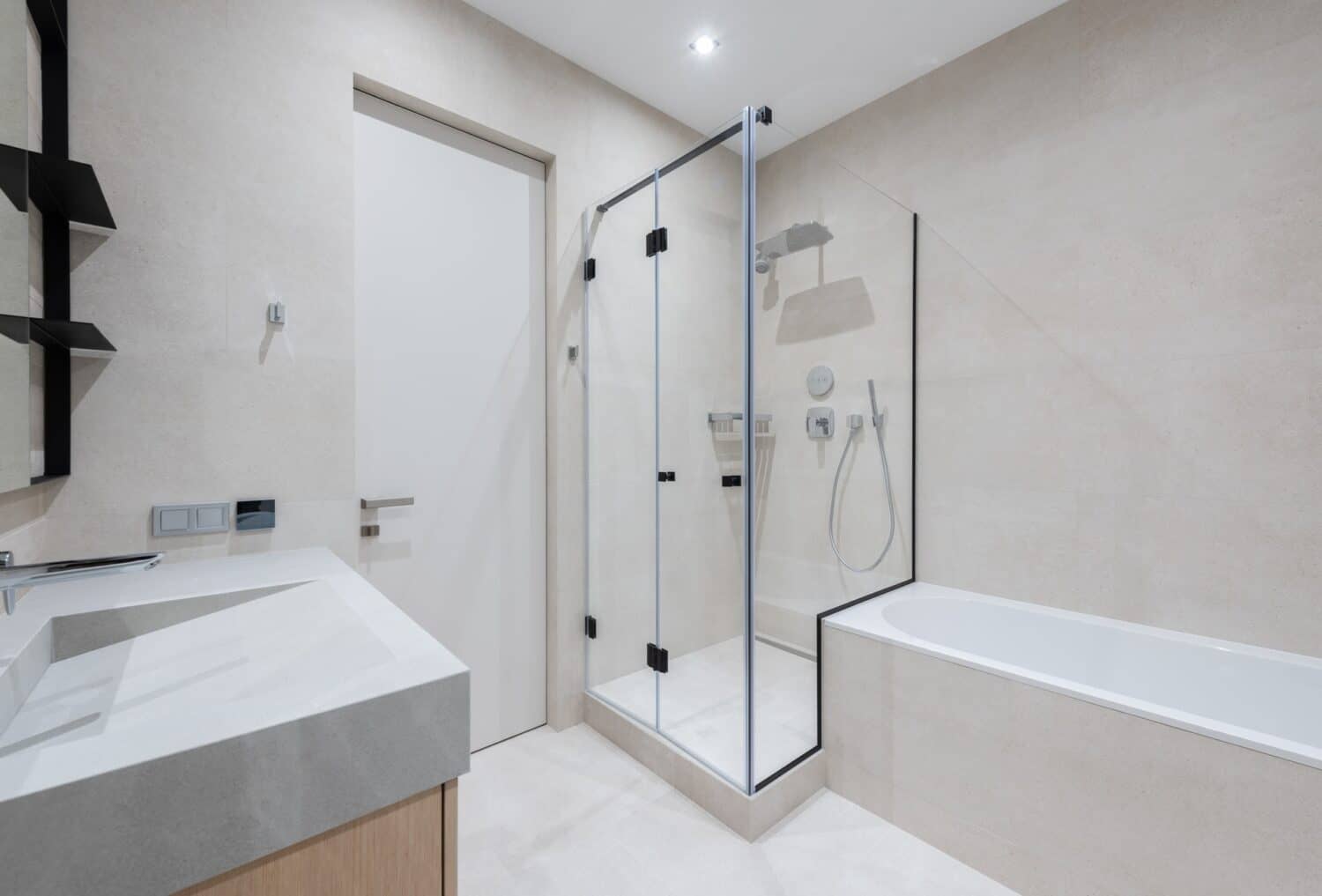
The best glass shower doors fit the finished opening, leave enough room to enter comfortably and keep water where it belongs. Start with the bathroom layout and how the door operates. Then choose the clarity, privacy and cleaning options you will be happy to live with.
A frameless enclosure can show off beautiful tile, but it is not automatically the best choice for a tight room or an awkward opening. A simpler door with well-planned access and serviceable seals may suit the bathroom better.
Choose the opening style before the glass finish
Sliding shower doors
Sliding shower doors avoid a swing into the bathroom, which can help beside a vanity or toilet. Check the actual entry width when the panel is open; the overall enclosure width is not the walk-through space.
A bypass system may let both panels move, while a single-slider arrangement leaves one side fixed. Try the handles from inside and outside. Also check headroom beneath any top rail and whether the bottom guide or track is easy to reach for cleaning.
Hinged and pivot doors
A hinged or pivoting panel can create a simple, open-looking entrance. Its full swing must clear the toilet, towel rail, vanity, bathroom door and anyone using the space.
Check the intended opening direction and the manufacturer's clearance requirements. Do not assume that a glass panel can be reversed on site or set to swing either way. Hardware position, support and the shape of the opening must suit the selected arrangement.
Fixed walk-in screens
A fixed panel removes moving door hardware and can make entry straightforward. It also leaves an open route for spray and splashes. The shower size, showerhead position and panel layout need to be considered together.
A short screen chosen only because it looks uncluttered can leave nearby flooring wet. Before choosing an open design, explain how the shower is used, including handheld spray and anyone who needs more room to move.
Framed or frameless: compare more than the outline
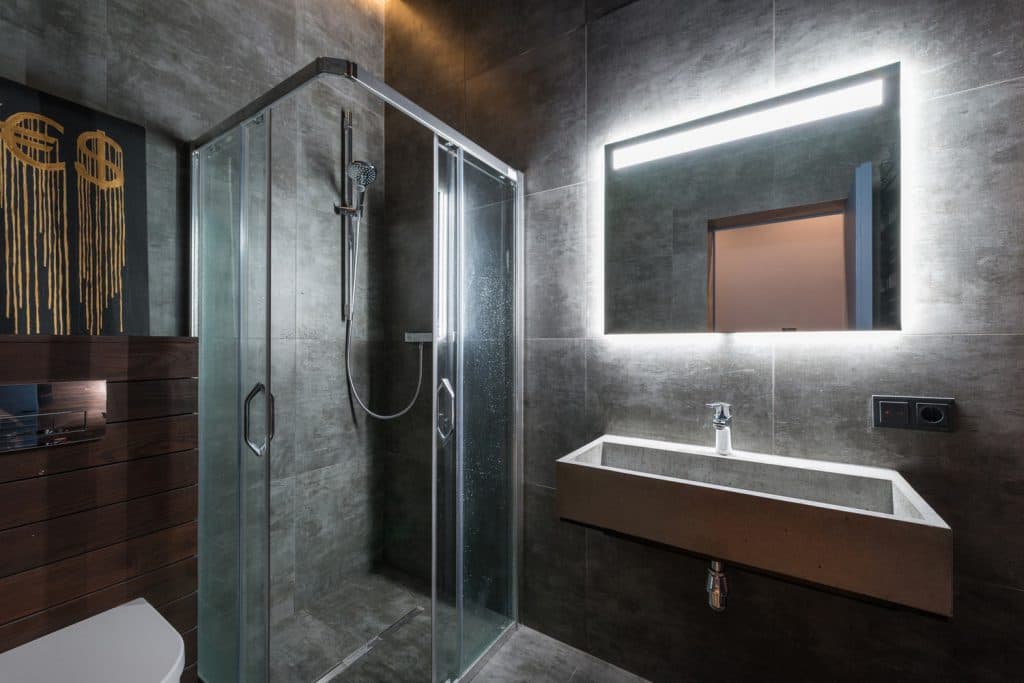
Framed designs support the glass within a more visible enclosure. Frameless shower doors reduce that framing, but still use hinges, clamps, guides or support bars. Semi-frameless products sit between those appearances, with the exact arrangement varying by model.
Look at the lower track, seals and glass-to-wall junctions. Can you reach the surfaces that collect water and soap? Are sweeps and seals replaceable? A frameless door is not automatically leak-free, and an older dirty track does not prove that every framed system will be hard to maintain.
Confirm the required safety glazing and hardware compatibility for the complete enclosure. Glass thickness alone does not establish that the door is safe or suitable for the opening.
Pick a finish for clarity, privacy or decoration
Clear glass
Clear glass keeps the tile and fittings visible and helps the shower feel connected to the room. Standard clear glass can show a green cast, particularly at the edges or against pale tile. Compare a sample beside your actual finishes before deciding whether it matters.
Low-iron shower glass
Low-iron shower glass reduces that green cast for a clearer appearance. It is an aesthetic choice, particularly noticeable with white stone or light tile. It does not by itself resist water spots or replace a protective coating.
Frosted shower glass
Frosted shower glass obscures detail while allowing light through. Test a sample with a person behind it and the bathroom lights on. The amount of privacy varies with the finish, lighting and distance; visible silhouettes may still matter in a shared bathroom.
Tinted glass
Tinted glass changes the colour and amount of light passing through the enclosure. Check it against both tile and hardware, and consider whether the shower will feel too dark. A darker tint does not guarantee privacy.
Rain, textured and hammered glass
Rain glass has a water-like pattern, while hammered glass has a rippled, irregular appearance. Other textured options create different degrees of visual distortion. These are design choices rather than universal privacy ratings.
Ask which face carries the texture, how it will be cleaned and whether the selected pattern is available for the specified system. An obscured finish may hide the tile as well as the person showering, so consider what you want to display.
What should you test on the sample?
Choose the priorities that apply to your bathroom. Bring the matching checks to a sample review before approving the glass finish.
Easy-clean shower glass still needs care
A coating can make some deposits easier to remove, but it will not eliminate soap residue or mineral marks. Ask what the particular coating does, whether it is factory-applied, and which cleaners and tools are permitted.
Build a manageable routine around the product's care instructions. Rinsing and removing water with an approved squeegee can reduce the amount left to dry on the glass. Do not use abrasive pads or an acid-based remedy without checking compatibility with the glass, coating, hardware and nearby stone.
If an existing enclosure looks cloudy, first identify hard-water deposits rather than assuming the glass needs replacement. Permanent surface damage, coating issues and removable residue are different problems.
What needs measuring before the order is final?
Final measurements should reflect the finished opening. Width can vary from top to bottom, and a wall that looks vertical may be out of plumb. Stock-product adjustment ranges are specific to that product; horizontal adjustment is not the same as tolerance for leaning walls.
Have the installer confirm the threshold, wall support, hinge or track locations, clear entry, headroom and surrounding fixtures. Agree who owns the final measurement and order approval. Once tempered, an incorrectly sized pane cannot be trimmed to fit.
For a Toronto condo, include elevator size, loading access and renovation arrangements in the discussion. Getting a large panel into the bathroom is part of installation planning, not a detail to discover on delivery day.
Compare the complete installed scope
The quote should identify the panel layout, glass, hardware, finish or coating, final measurement, removal and disposal, installation and warranty labour. Ask how leaks, alignment problems and damaged seals are handled after handover. Our Toronto shower-door cost guide covers pricing and quote inclusions in more detail.
Questions to settle before choosing
Is frameless always the best shower-door option?
No. Compare the entry width, door movement, water control and cleaning access for the actual bathroom. Reduced framing alone does not establish that the enclosure suits the opening.
Does low-iron shower glass prevent water spots?
No. Low-iron glass reduces the green cast for a clearer appearance. A protective coating and the required cleaning routine are separate choices.
Can tempered shower glass be trimmed after delivery?
No. Final dimensions and fabrication details must be settled before tempering. An incorrectly sized tempered pane cannot be trimmed to fit.
Can frosted shower glass guarantee complete privacy?
No. The finish, lighting and distance from the glass affect what remains visible. Test the intended sample with a person behind it and the bathroom lights on.
Discuss the enclosure you have—or the one you are planning
If the current enclosure has damaged glass or worn hardware, Glass Repair Canada provides shower-door repair. Send photos and describe the fault before deciding that the entire enclosure must go. For a new enclosure, contact the team to confirm the available supply and installation scope for your layout.