

Glass construction explained • Toronto & GTA
What is toughened glass? In architectural glazing, the term usually means thermally tempered glass: a sheet strengthened by controlled heating and rapid cooling. It is used for applications such as doors and shower enclosures, where the correct safety-glazing specification matters.
Toughening changes how the glass carries stress and how it breaks. It does not make the pane unbreakable, scratch-proof or suitable for every location. Understanding those limits helps you order the right replacement and avoid damaging a panel that cannot be altered after manufacture.
How toughened glass manufacturing works
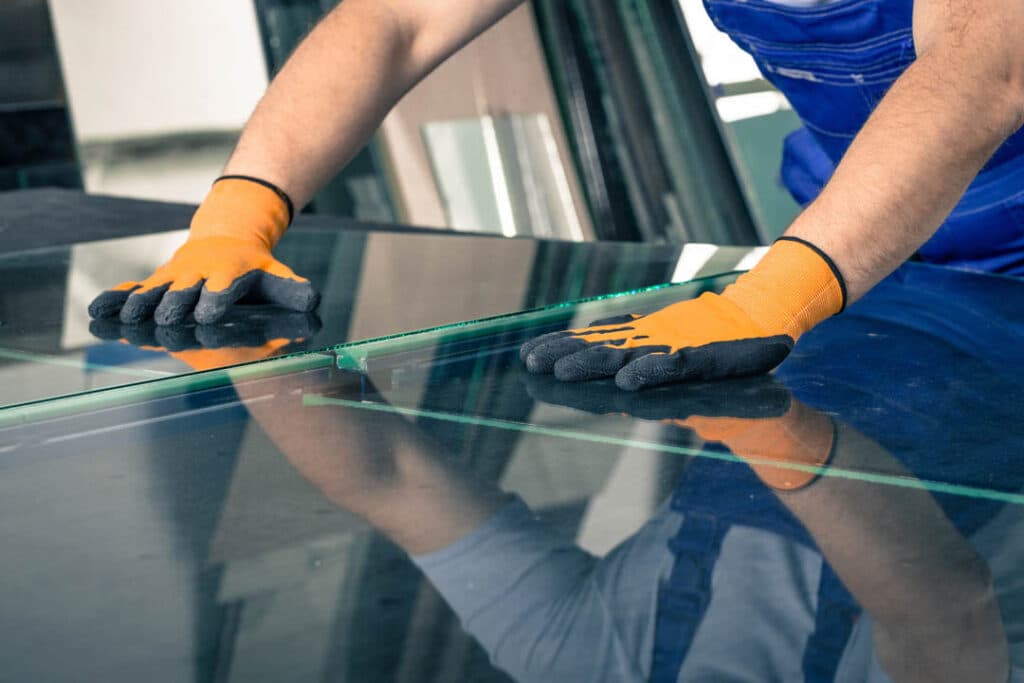
The fabricator starts with an intact sheet of glass. It is cut to its final outline, the edges are finished, and the required holes and notches are made. The prepared pane then passes through a furnace and is cooled rapidly with air.
Prepare the pane
Confirm the outline, edgework, holes and notches on the intact sheet.
Heat under control
The prepared glass passes through a tempering furnace.
Create residual stress
Air cooling creates surface compression and balancing tension inside.
Cooling creates compression at the surfaces and balancing tension within the sheet. That stress pattern increases its resistance to certain loads compared with ordinary annealed glass. The sheet is not shattered and reassembled during manufacture.
The stress pattern is part of the product
Because the final stress pattern runs through the pane, later cutting or drilling can release it and cause the glass to fragment.
Dimensions, handle holes and hinge cut-outs must therefore be settled before thermal tempering. A small ordering error can mean making a new panel rather than trimming the one delivered.
What makes it safety glass?
When fully tempered glass breaks, it generally fragments into many small pieces rather than the large shards associated with ordinary annealed glass. This reduces some injury risks, but the pieces can still cut, fall or leave an unprotected opening.
Tempered safety glass needs to be specified for the intended assembly. Glass for a shower door, an entrance, a tabletop and a protective railing does not become interchangeable because each piece is tempered. Size, thickness, supports, holes, loading and applicable product requirements all matter.
Tempered and laminated describe different things
Tempering
A heat-treatment process changes the stress pattern within a glass pane.
Lamination
Glass layers are joined with an interlayer that can retain fragments if the glass breaks.
Laminated toughened glass combines the two: the layers are tempered and then assembled with the specified interlayer.
That combination can be useful where post-breakage behaviour matters, but holding fragments together is not the same as maintaining a load-bearing barrier. For a balcony or stair guard, the glass build-up, interlayer, fixings and support arrangement must work as a complete design. Our types of glass railings guide compares the mounting systems those panels sit in.
Our laminated versus tempered glass comparison explains when those distinctions change the specification. Neither word alone guarantees security, sound insulation or a compliant railing.
Why can a strong pane break unexpectedly?
Glass can fail after impact, edge damage, contact with unsuitable hardware or stresses associated with the installation. In some tempered glass, a rare internal inclusion can also contribute to breakage. An impact is not always witnessed, and damage may predate the visible failure.
If the same opening has failed more than once, replacing the pane without reviewing the surrounding conditions may miss the underlying problem. The inspection should consider the glass specification, edge clearances, supports, glass-to-metal contact and the condition of the frame or hardware.
A photograph of fragments alone usually cannot establish the cause. From a safe position, record the location, time, recent work and anything unusual you noticed. Keep the invoice, glazing specification and installation details so the supplier can investigate and explain any warranty decision in writing.
What should you do after a pane breaks?
Avoid handling large pieces, loosening clamps or removing a door to take measurements. The immediate job is to secure the area safely; measuring and replacing the panel comes after that. Where glass is cracked rather than fully fragmented, its appearance is not a reason to keep using it.
Appearance, heat exposure and cleaning
Clear, tinted, frosted and patterned finishes concern appearance. An insulated glass unit concerns glazing construction. Those choices can be combined with heat-treated glass where the specified product and fabrication process allow it.
Architectural tempered glass should not be substituted for glass designed for an oven, stove or other specialised high-temperature use. Similarly, tempering does not remove the risk of scratches from unsuitable cleaning tools. Follow the care instructions for the pane and any coating, especially around exposed edges.
If a surface mark is the problem, our scratched-glass guide explains why cosmetic polishing is a separate question from the safety of cracked or chipped glass.
Settle the details before fabrication
Use this checklist to organise the discussion before fabrication. Mark a topic only when you have the relevant details or know who will confirm them. A tick does not approve the design, authorise an order or replace the fabricator’s final checks.
For existing damaged glass, use photos and available records. Do not remove or handle the panel to complete this list.
Common questions about toughened glass
Can tempered glass be cut to fit a smaller opening?
No. A fully tempered pane cannot be cut, drilled or notched like an untreated sheet. Order a correctly sized replacement with the required edgework and holes completed before tempering.
Can I identify the glass from its thickness?
Thickness does not reliably identify the construction. Look for available product markings and original paperwork, and have the supplier confirm the build-up. Do not break a pane or scratch an edge to test it.
Does laminated glass stay safe after it cracks?
Retained fragments do not mean a damaged panel can continue in service. The remaining protection depends on the complete assembly and the damage. Keep the affected area out of use and arrange assessment.
Order for the application, not just the opening size
Glass Repair Canada supplies tempered and laminated safety-glass panels. For a Toronto or GTA project, provide the intended use, photos, approximate dimensions and any existing drawings or glass specification. Confirm who takes final measurements and approves the holes, edgework and supporting hardware before fabrication begins.
Discuss the safety-glass specification