

Safety glass • Toronto & GTA
The right safety glass depends on what the opening needs to do, especially after breakage. A laminated vs tempered glass comparison starts with how each product is constructed. Tempered glass normally breaks into small fragments. Our toughened glass guide explains how that pane is made and why it cannot be cut afterward. Laminated glass has an interlayer that helps hold broken pieces together. Neither label, on its own, tells you whether a panel is right for a shower, window, railing or security opening.
Some applications use tempered-laminated glass, combining both constructions. The useful starting point is the job the complete glazing system must perform, followed by the glass, supports and hardware needed to achieve it.
The difference you can use when comparing quotes
Laminated safety glass consists of glass sheets bonded to an interlayer. PVB is a common interlayer material, although other materials and multilayer constructions are used. If the glass breaks, fragments tend to stay attached to that interlayer rather than immediately separating into loose pieces.
Tempered safety glass is heat-treated and rapidly cooled to create a different internal stress pattern from ordinary annealed glass. It can resist greater stresses than comparable annealed glass and usually breaks into smaller fragments instead of long sharp shards. Those fragments can still cause injuries.
Tempered
Laminated
Tempered-laminated
Simplified cross-sections, not to scale. These drawings do not specify thickness, interlayer type, supports or a tested system.
Fragment retention is not a guarantee that a broken panel stays in place. A tempered pane can leave an open space when it breaks. Laminated construction may retain fragments, but whether the damaged panel remains in place depends on the interlayer, glass, support and damage. Cracked laminated glass should not be treated as safe to keep using simply because the pieces remain together.
| Compare | Tempered | Laminated |
|---|---|---|
| Construction | Heat-treated glass. | Glass sheets bonded to an interlayer; may include tempered panes. |
| After breakage | Usually small fragments; an opening can be left exposed. | Fragments tend to adhere to the interlayer. Retention depends on the complete system. |
| Later alterations | No cutting or drilling after tempering. | Fabrication depends on the construction. Tempered layers cannot be trimmed after tempering. |
| What to order | The specified glass, fabrication and compatible support system. | The specified glass build-up, interlayer and compatible support system. |
Choose for the location, not a universal winner
Shower doors and interior doors
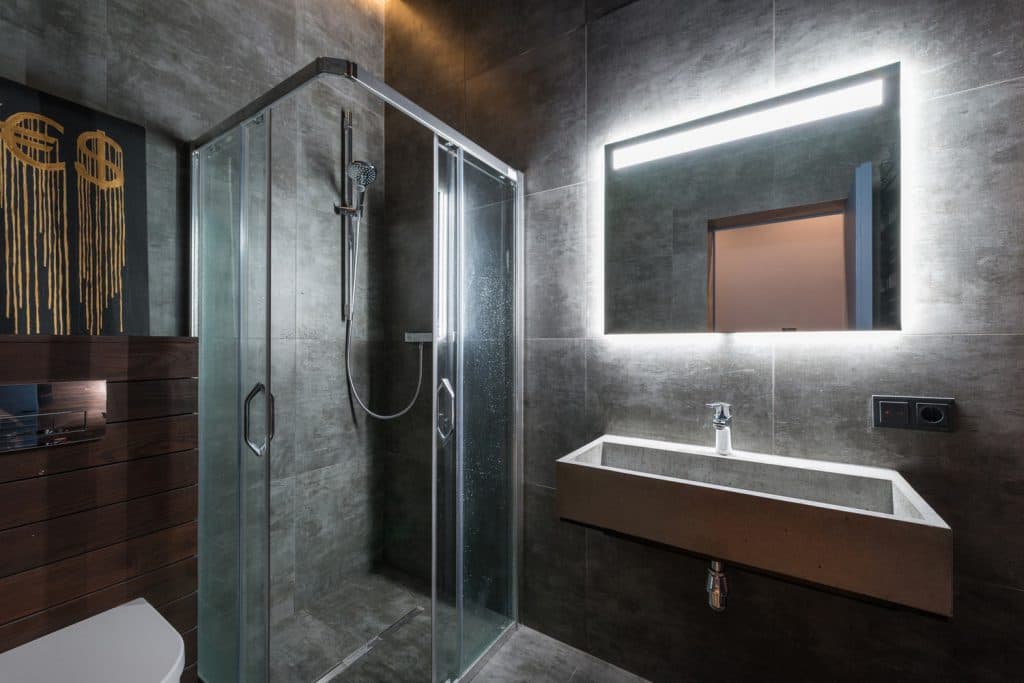
A shower enclosure needs safety glazing and hardware designed for the panel’s size, weight and movement. Tempered glass is common in these systems. The thickness, holes and hinge arrangement must match the selected design; choosing a thicker panel without checking the hardware is not an upgrade plan.
For an existing enclosure, matching the glass also means matching its cut-outs, clearances and fittings. Our shower-door repair and replacement service is a useful starting point when an existing door or panel is damaged. For a home entrance, our glass front door guide covers sightlines, privacy and the complete door assembly.
Railings and overhead glazing
These applications raise different concerns because broken glass can affect fall protection or fall onto people below. The required glass construction, post-breakage behaviour and supports need to be selected as part of the applicable system design. Neither “tempered” nor “laminated” is a complete railing specification.
For an Ontario guard project, review the glass-railing planning guide with the person responsible for the design, who should confirm the current requirements for the actual project. Do not copy a shower-glass specification into a railing or assume an intact-looking cracked laminate can continue serving as a guard.
Street-facing windows and quiet rooms
Acoustic laminated glass can be useful for reducing transmitted sound, but the interlayer is only one part of the result. Pane thicknesses, air spaces, frame seals and installation all matter. Traffic can also reach a room through vents, walls and gaps around the window.
Ask for acoustic test data for the exact proposed assembly. Sound Transmission Class (STC) and Outdoor-Indoor Transmission Class (OITC) are different ratings; OITC is particularly relevant when assessing outdoor transportation noise. A small change in a quoted rating may not justify a large premium for your particular problem. Establish whether the noise is entering through the glass or around it before purchasing a replacement.
Storefronts and security openings
Fragment retention can be helpful, but ordinary laminated glass is not a promise that an opening will resist forced entry. Security performance depends on the tested glazing, frame and retention system, including the stated threat and test conditions. The same caution applies to ballistic protection: it requires a specialist specification, not an assumption based on the word laminated.
Prepare an enquiry for your opening
Choose the opening to see what to include in your enquiry. This checklist prepares a conversation; it does not select a glass thickness, certify code compliance or approve a damaged panel.
Can laminated or tempered glass be cut?
Tempered glass must reach its final shape before tempering. Holes, notches and edges cannot be altered later by cutting or drilling the finished pane. This is why an inaccurate measurement or a late hinge change can mean ordering new glass.
Some laminated constructions can be fabricated with appropriate equipment, but a laminate containing tempered panes cannot simply be trimmed to size after tempering. Confirm the construction first. A missing or hidden safety mark does not prove a pane can be cut, and an installed panel should never be tested by drilling it.
Finished dimensions, thickness, edges, holes, notches, cut-outs and the selected hardware.
Do not cut, drill or trim the finished pane. A changed dimension or fitting may require new glass.
For a replacement order, provide the opening and application details rather than attempting to remove and measure a damaged panel yourself. A glazier can establish the finished dimensions, thickness and required fabrication.
Which costs more?
There is no useful price comparison without matching the size and specification. A small standard tempered pane and a large acoustic laminate are different products; their prices do not establish a universal premium for lamination.
Compare the glass build-up, interlayer, thickness, edge finishing, holes, coating, fabrication, delivery and installation. For replacement work, include removal, disposal and any changes to supports or hardware. An apparently cheaper pane may omit the performance or fabrication the opening needs.
The same principle applies to weight, clarity and scratch resistance. Those properties depend on the actual glass and finish. Neither safety-glass label guarantees a lighter panel, a clearer view or a scratch-proof surface.
Can damaged safety glass be repaired?
A cosmetic adhesive or automotive resin treatment does not establish that building glass has regained its original performance. Cracks, chipped edges, separation within a laminate or damage around fittings need assessment. Keep a damaged door, shower or guard out of use while the next step is arranged.
Replacing the panel may still allow sound surrounding components to remain. For an insulated window, a suitable replacement glass unit can sometimes be fitted within the existing sash. Laminated or tempered panes can also be part of an insulated, low-E unit. Our window-glass guide introduces the wider glass categories; confirm the actual replacement specification with the glazier.
Common safety-glass questions
Can glass be both tempered and laminated?
Yes. Tempered-laminated glass combines tempered glass sheets with a bonded interlayer. Its suitability still depends on the specified glass, interlayer, supports and application.
Does laminated glass stay safe after it cracks?
No. An interlayer may retain fragments, but that does not establish that the damaged panel can remain in use. Its condition and supports need assessment.
Can tempered glass be drilled for a new hinge?
No. Holes, notches and finished dimensions must be established before tempering. A changed hinge arrangement may require a new panel.
Is laminated glass automatically soundproof or security-rated?
No. Acoustic and security performance depend on the exact tested assembly. Ask for evidence matching the proposed glazing, frame, retention and intended performance.
Order the performance the opening requires
Contact Glass Repair Canada with photographs of the glass and its supports, the location, approximate size and any visible product markings. Explain whether the priority is safety, traffic noise, security or replacing a damaged panel in Toronto or the GTA.
Ask for the proposed safety-glass construction and installation scope in writing. A specification tied to the opening is more useful than choosing laminated or tempered glass on its name alone.
Discuss your glass opening