
Reglazing is usually worth comparing with window replacement when the glass has failed but the frame and sash are still sound. Replacing the entire window makes more sense when the retained parts cannot provide a lasting repair, or when the proposed upgrade needs a different assembly.
Start with what is damaged—not the window’s age or appearance alone. For a Toronto homeowner with one foggy pane, the choice may be a replacement sealed glass unit. A window with wet, deteriorating wood around the opening needs a broader investigation. These are different jobs, even if both estimates use the word “replacement.”
What does window reglazing include?
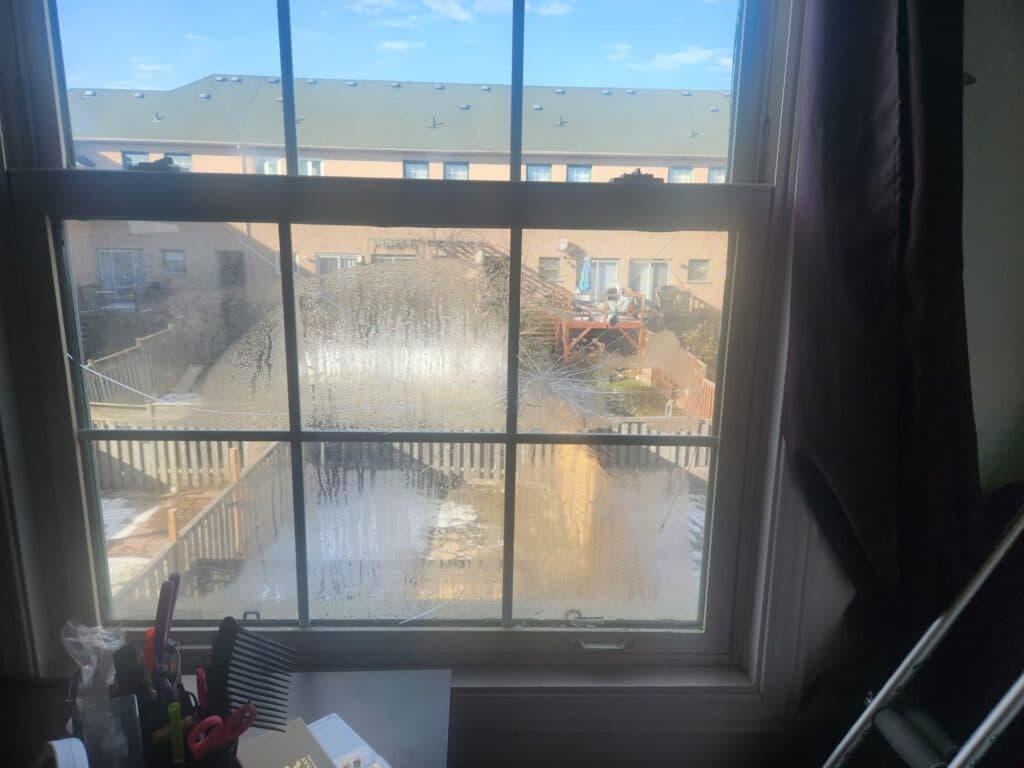
On modern windows, reglazing commonly means glass-only replacement: removing a pane or insulated glass unit while keeping the existing sash and frame. An insulated glass unit, or IGU, is the sealed assembly of two or more panes and its edge spacer. When its seal fails, moisture can enter the cavity and cloud the view.
On an older wood window, reglazing can instead mean renewing the putty that holds and seals individual panes. That work may also involve glass removal, timber repairs, priming and painting.
Ask which meaning applies before comparing quotes. Renewing old putty and replacing a factory-sealed unit do not restore the same components. Have older painted joinery assessed before sanding or stripping it, because the existing coating may need specific handling.
Three scopes that are easy to confuse
Glass-only replacement
The installer replaces the affected glazing and keeps the surrounding components in place. This can limit disturbance to interior trim, exterior finishes and the wall opening.
What stays: Existing sash, frame and operating hardware. Their condition still matters.
Insert or retrofit replacement
An insert is a new window fitted within a suitable existing frame. It changes more than the glass but retains framing around the opening. That frame needs to be sound, properly sealed and insulated.
Check the view: Ask to see proposed frame dimensions if keeping as much daylight as possible matters to you.
Full-frame replacement
This removes the old frame as well as the sash and glass. It exposes the rough opening for inspection and necessary repairs, then requires installation, sealing and finishing.
Wider access: It can address problems a new glass unit or insert would leave concealed.
Which scope should you ask about?
Describe one window at a time. This guide suggests what to discuss during an assessment; it does not diagnose the opening or estimate a price.
The interactive guide needs JavaScript. Use the comparison below: isolated glass failure with a sound frame is worth a glass-only assessment; frame damage, leaks or operating problems need broader investigation.
Your selections stay in this page and are not submitted. Final scope depends on inspection, measurement and glazing compatibility.
When reglazing is a sensible option
A broken pane or moisture trapped between panes can be an isolated glass problem. A surface scratch is a different problem. Our glass scratch guide explains when polishing is not a repair. Glass-only replacement is worth pricing if the sash closes evenly, the frame is serviceable and there is no unresolved water entry around the opening. The replacement must match the glazing system and any safety-glass requirements for that location.
Consider a fixed picture window with a cloudy sealed unit, intact trim and no evidence of leakage around the frame. Replacing its glass may address the actual defect without removing the entire assembly. This is a decision example, not a diagnosis of every foggy window.
Our cloudy double-pane window guide explains how to distinguish surface moisture from between-pane fog. You can also ask about foggy window repair in Toronto when a sealed unit needs assessment.
When the window needs more than new glass
New glass will not straighten a distorted frame, renew a worn crank or repair the source of a wet wall. A window that does not close properly may need hardware or sash work; recurring leaks may involve flashing, perimeter seals or the surrounding building. Those findings determine whether targeted repairs or full-frame replacement are appropriate. Our signs it is time to replace your windows cover the problems new glass will not fix.
| What you notice | What to investigate | What new glass alone leaves unchanged |
|---|---|---|
| Between-pane fog or isolated glass damage | Glazing failure, unit specification and condition of retained parts | Frame, sash and operating hardware |
| Sticking, uneven closing or a worn crank | Hardware, sash alignment and frame condition | The cause of operating trouble |
| Recurring water entry or deteriorating wood | Leak source, flashing, perimeter and rough-opening condition | Concealed damage or an unresolved leak path |
| A planned glazing or performance upgrade | Glazing-pocket dimensions, added weight and approved options | Frame performance and installation quality |
An energy upgrade such as Low-E glass also needs a compatibility check. A thicker triple-pane unit changes weight and dimensions, and cannot simply be fitted into every double-pane sash. Check the glazing pocket, hardware capacity and manufacturer-approved options before ordering.
Compare whole-window performance. A centre-of-glass figure does not describe the frame or installation when you are choosing a new assembly. Our guide to choosing windows helps once the opening needs a new unit.
Compare the parts that stay as carefully as the new parts
Request itemised quotes for the same opening. Our window replacement cost guide explains what usually changes the price. A lower glass-only price is useful only if the retained frame and hardware are worth keeping. An old wood sash requiring extensive restoration can involve more labour than the term “reglazing” suggests.
- Glass and retained componentsIdentify the proposed glass, coating, spacer and safety specification, plus the parts that will remain.
- Supply, labour and accessSeparate measuring, glass or window supply, installation, removal, disposal and access charges.
- Repairs and finishingIdentify timber or opening repairs, trim, painting and exterior finishing rather than assuming they are included.
- Total and warrantyConfirm the Canadian-dollar total, HST and product and installation warranty coverage. Ask whether retained frames or hardware are excluded.
If one quote replaces glass and another removes the entire frame, ask each contractor which observed defect justifies that scope. This gives you a useful comparison instead of two unrelated totals.
Can you repair some windows and replace others?
Yes. A home can have one failed glass unit, another window needing hardware and a third with extensive frame deterioration. There is no need to give every opening the same treatment. Keep a room-by-room list and use our window repair or replacement guide for the broader symptom checklist.
Reglazing and replacement: common questions
Does reglazing always mean replacing the glass?
No. On modern windows, it commonly means glass-only replacement, including a sealed insulated glass unit. On older wood windows, it can mean renewing glazing putty and may include timber repairs, priming and painting. Confirm the exact scope in the quote.
Does fog between panes mean I need a whole new window?
Not necessarily. A replacement insulated glass unit may be suitable if the frame and sash are sound, the window operates properly and water entry around the opening has been ruled out. The retained components still need assessment. Our types of window glass guide explains how insulated units, coatings and safety glass combine.
Will replacing the glass fix a leaking frame?
Not by itself. Recurring water entry can involve flashing, perimeter seals or the surrounding building. The source needs to be identified before choosing glass replacement, targeted repairs or full-frame work.
Can triple-pane glass go into my existing double-pane window?
Only if the existing system can accommodate the required dimensions and weight. The glazing pocket, hardware capacity and manufacturer-approved options need to be checked before ordering.
Get the right scope for your Toronto or GTA window
For window glass replacement, send Glass Repair Canada a photo of the full window, a close-up of the problem and any manufacturer label. Explain whether you want to match the existing glass or discuss an upgrade.
Those details help establish the right scope before final measurement and a written quote.